
WasteWater Treatment

How An Air Blower For Wastewater Treatment Is Helpful?

about

What Is Wastewater Treatment?

Wastewater treatment is the process of reversing the damage that has been done to one of the most valued natural resources, including textiles, food, and drink. Water is an essential resource, and due to its natural characteristics, it provides one of the most effective ways to transport waste in industrial and municipal processes. 


  • The wastewater treatment process aims to speed up naturally occurring processes and bring the water back to the desired purity.  
  • The cleaned wastewater is returned to a natural watercourse in societies.  
  • Once the water has been cleaned, an industry may reuse it within the business, send it to a municipal wastewater system for additional processing, or discharge it into a natural river. 
  • The overall wastewater treatment process includes two basic phases, i.e, primary and secondary phases.  
  • At first, the primary phase serves as a clarifier, where grease and oil are suspended out of the wastewater at the top and particles are deposited at the bottom.  
  • Phase two then starts with water being pumped into an aeration tank. The secondary stage uses biological processes to further clean wastewater.  

  • There is rarely a third phase when additional processing of chemicals could take place

How an industrial air blower for wastewater treatment helpful?

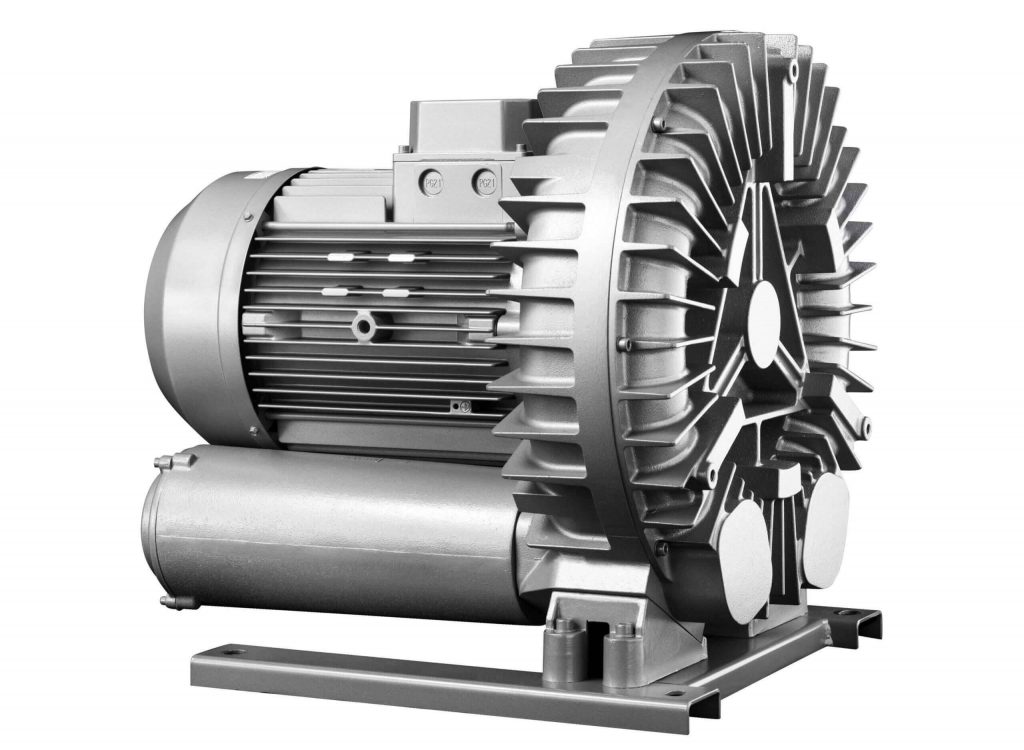
An industrial air blower for wastewater treatment is usually used in aeration and agitation to produce air bubbles.  


  • The primary function of the aeration process is to supply all of the above biological processes with useful oxygen. An industrial blower makes it possible to maintain a high concentration of microorganisms (water cleaning agents) compared to those occurring naturally. 
  • Furthermore, water circulates during the agitation process and keeps waste items floating throughout, making them accessible to microorganisms so they can use and remove them from the water stream. 


Generally, aeration levels are 5-7 times higher in wastewater treatment than they appear naturally. Therefore, due to the sudden lack of enough oxygen, the microorganisms will start dying immediately. System operators cannot take this risk, as it might take days or weeks for wastewater treatment systems to return to normal. Therefore, the wastewater treatment process uses multiple blowers to provide redundancy in case a blower needs maintenance or replacement. 

How To Select The Right Blower For Wastewater Treatment?

  • Although the theory behind wastewater treatment is the same, there is no one and only answer to choosing the right blower for the wastewater treatment process. 
  • Many factors affect the user demand for a blower for wastewater treatment, such as required flow, system pressure, available space, and ambient conditions.  
  • Furthermore, since oxygen is very important for the wastewater treatment process, redundancy of the air blower is essential. 
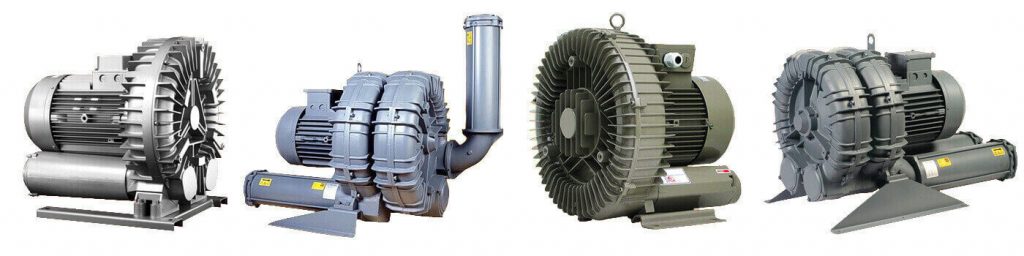
  • Blower for wastewater treatment comes with two popular designs, i.e., centrifugal and positive displacement technology.  
  • Screw elements and lobe elements are used in positive displacement technologies to physically move air.  
  • On the other hand, centrifugal technologies use a dual process where an impeller speeds the air and a diffuser increases the air pressure. Sending the air through several stages of impellers or one high-speed impeller will provide the required ultimate flow and pressure. The single impeller can be driven directly or by a series of built-in gears to reach this high speed. 
  • The first step in selecting the right blower for wastewater treatment is to determine the system’s required flow.  
  • It is determined on the basis of the amount of oxygen microorganisms need in the wastewater treatment process.  
  • The amount of oxygen the wastewater stream needs depends on the metabolism of the organic material, the effectiveness of oxygen exchange in the tank, and the site conditions. 
  • Environmental conditions also greatly affect the selection of a blower for wastewater treatment 
  • Positive displacement and multistage centrifugal units usually perform better in more robust environments and outdoor applications.  
  • However, high-speed turbos and integrally geared centrifugal units are better suited for interior or cleaner applications. 

Final Thoughts

We now know that efficient wastewater management depends on having the right equipment. Therefore, choosing a reliable Industrial Wastewater Treatment Blower can greatly affect long-term cost savings, system reliability, and oxygen supply. Whether you need a Wastewater Treatment Air Blower for municipal projects or a high-performance Wastewater Treatment Blower for industrial plants, the right solution ensures sustainability and compliance. 

Side Channel Blowers does not just provide industrial equipment; we deliver reliable technology that maintains your system’s performance at optimal efficiency. 

So, are you ready to upgrade your wastewater treatment process? Let’s make your industrial applications more efficient together! Visit our website at Side Channel Blowers to learn more about our products and pricing details. 

Looking for Busch, FPZ, ESAM, Gardner Denver/Elmo Riestchle blowers? Click to read about other industrial blower brands. 

Leave a Comment